 Comparison
Somatic vs Traditional Yoga for Tension: Key Differences
Last Updated: October 24, 2026
Quick Summary
Somatic vs traditional yoga for tension differs mainly in where your attention goes: traditional yoga moves you toward a set pose and holds it, while somatic yoga asks you to notice what your body does along the way and adjust. Neither style has been shown in head-to-head research to beat the other for muscle tension.
- Somatic yoga is slow and inwardly focused, letting small, comfortable movements emerge.
- Traditional yoga follows set poses, sequences, and alignment, often teacher-led at a defined pace.
- Choose somatic yoga if tension keeps returning in the same spots.
- Choose traditional yoga if you like structure and a class environment.
- Try two weeks of each, ten minutes a day, rating your comfort each evening.
Table of Contents
- Somatic vs Traditional Yoga for Tension: A Side-by-Side Comparison
- Somatic Yoga for Muscle Tension: How It Works and What to Expect
- Gentle Yoga for Neck and Shoulder Tension: When Traditional Yoga Helps
- How to Choose Between Them
- Frequently Asked Questions
Somatic vs Traditional Yoga for Tension: A Side-by-Side Comparison
Somatic vs traditional yoga for tension comes down to where your attention goes. Traditional yoga moves you toward a shape and holds it; somatic yoga asks you to notice what your body does along the way and adjust.
Neither style has been shown in head-to-head research to beat the other for muscle tension. A 2026 paper in the PubMed Central review of yoga and stress relief notes that meta-analyses have reported yoga can ease stress and improve depression and anxiety symptoms, but it doesn't compare styles.
Somatic yoga is slow and inwardly focused, letting small, comfortable movements emerge. Traditional yoga is structured around set poses, sequences, and alignment, often taught in a group class at a defined pace.
| Question | Somatic Yoga | Traditional Yoga |
|---|---|---|
| Where attention goes | Internal sensation | Pose shape and alignment |
| Pace | Slow, self-directed | Set sequence, teacher-led |
| Best for | Stubborn, recurring tightness | General stiffness, strength, routine |
The real difference is control. In a traditional class, the sequence decides what happens next; in a somatic practice, your body's feedback decides.
Somatic Yoga for Muscle Tension: How It Works and What to Expect
Somatic yoga for muscle tension slows you down enough to notice how you're holding yourself, then invites small movements that let that holding soften. Expect short sessions, gentle ranges, and more attention than exertion.
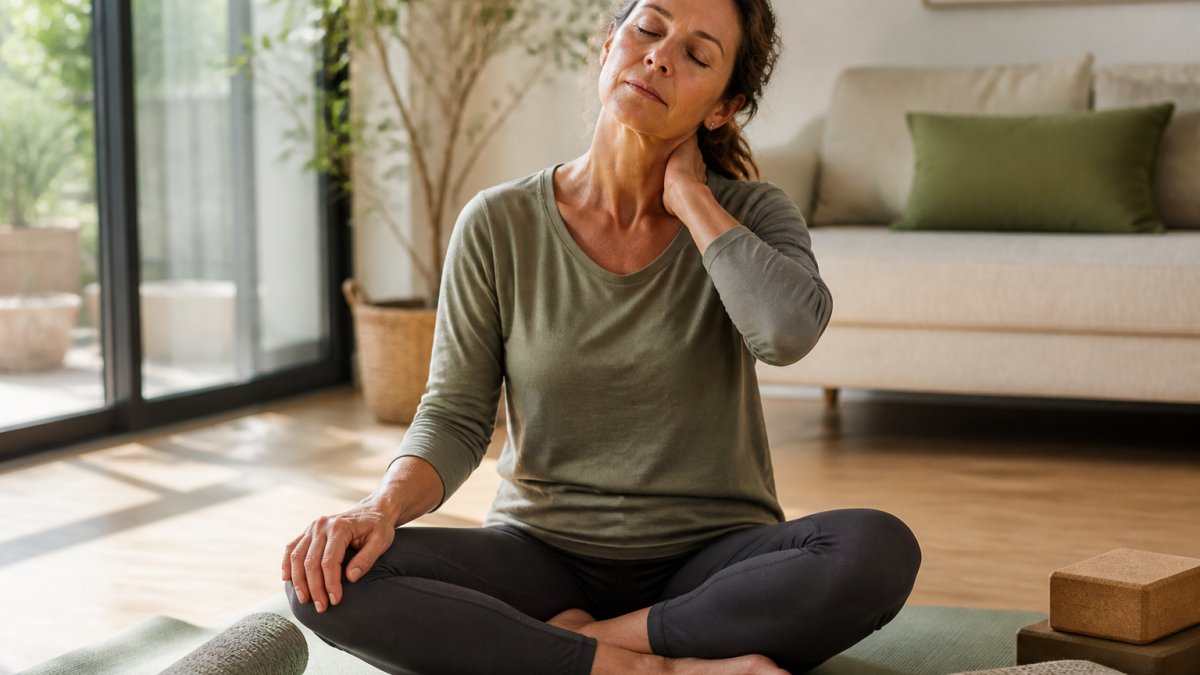
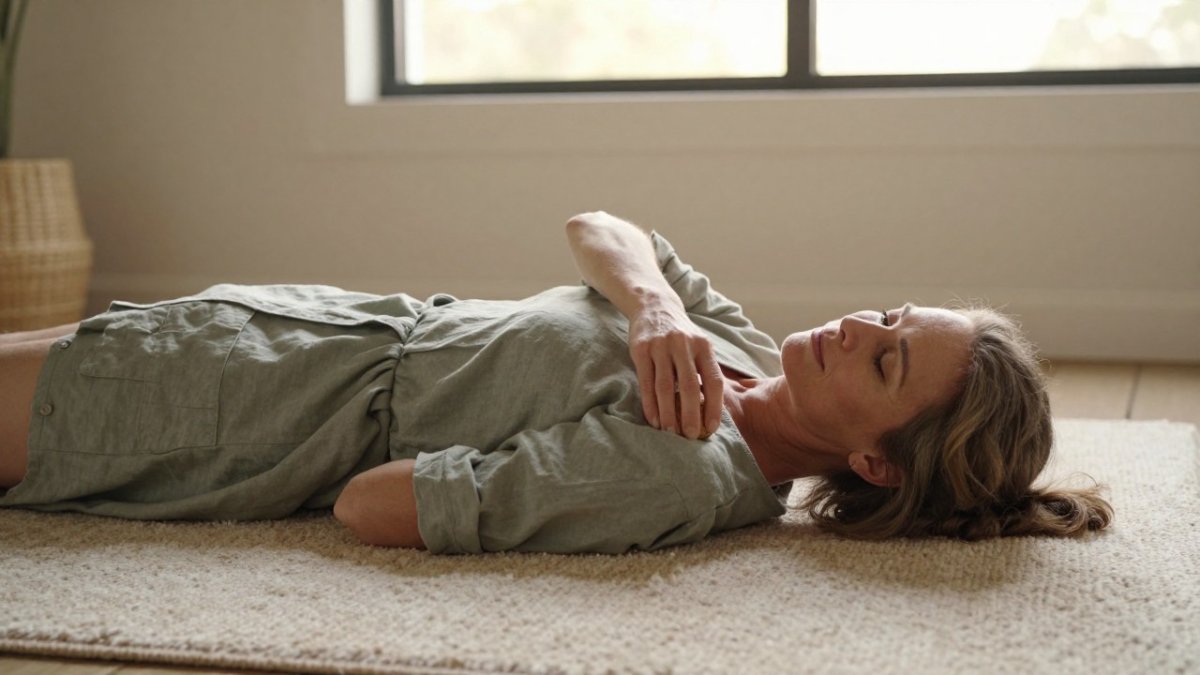
A beginner session: lie on your back, notice where you feel contact with the floor, slowly turn your head left and right in an easy range, add a small slow shoulder roll, pause and notice what changed, then repeat once and stop.
A 2016 article on trauma-sensitive yoga as a complementary treatment describes practitioners reporting greater body connectedness from this kind of gentle, choice-based practice. That's a report of benefit, not proof of a mechanism.
Five to fifteen minutes is a realistic start; consistency matters more than duration. For a short routine, see our 5-minute somatic routine for stress. If neck tension is your main complaint, our guide to somatic exercises for neck pain goes deeper.
Traditional yoga isn't the villain. It has real value, and for some kinds of tension it's the better tool.
Gentle Yoga for Neck and Shoulder Tension: When Traditional Yoga Helps
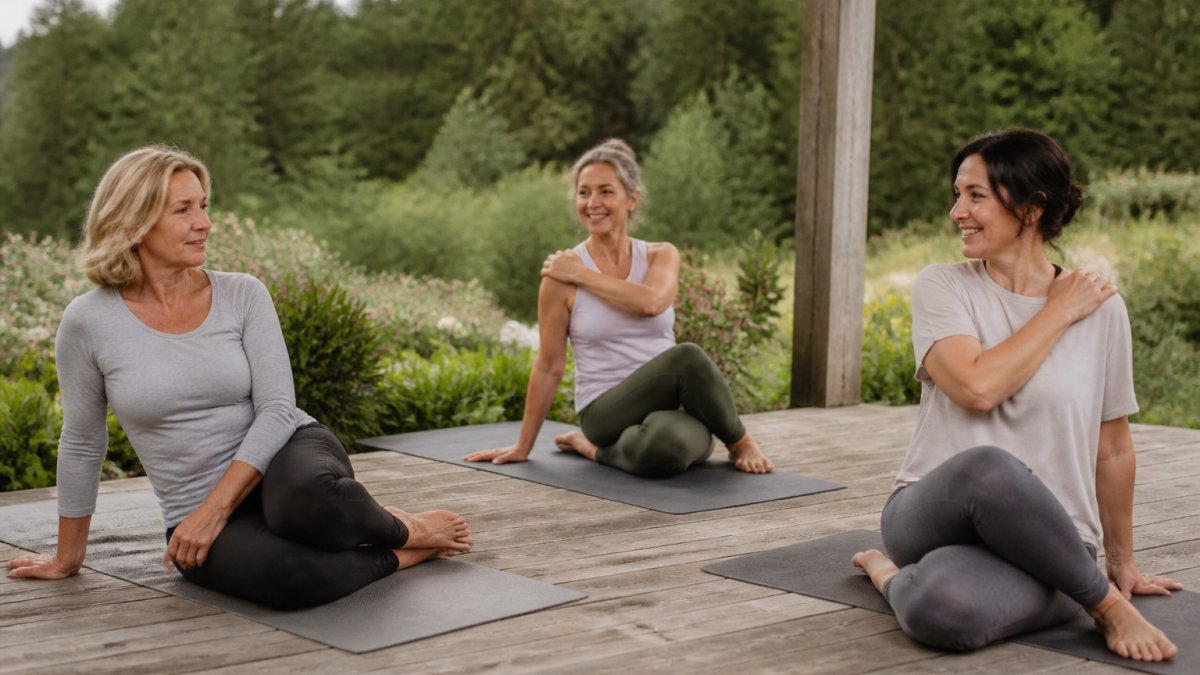
Gentle yoga for neck and shoulder tension helps most when your tightness is general rather than stubborn, and when you want structure you don't have to invent. Look for classes labeled gentle, restorative, or beginner; slow Hatha is a common entry point.
Where traditional yoga falls short is pace. A fast flow can move past the point where your body would have said "that's enough," leaving you stretched but not less tight. Tell the teacher about your neck and shoulders before class, and use props freely.
If you're weighing this against a somatic approach, notice which one you'd actually do on a Tuesday night. The best practice is the one you'll repeat.
How to Choose Between Them
Choose somatic yoga if tension keeps returning in the same spots, if traditional classes leave you sore or discouraged, or if you want something short. Choose traditional yoga if you like structure, want a class environment, and find gentle sequences reliably loosen you up.
A practical test: try two weeks of each, ten minutes a day, and rate your comfort each evening.
Frequently Asked Questions
Is somatic yoga better than regular yoga for tension?
Research does not show that somatic yoga is superior to traditional yoga for tension. A 2016 article in PubMed Central notes expert practitioners report benefits like greater body connectedness, and a 2026 paper says yoga can ease stress, but no head-to-head study compares the two styles for muscle tension. What matters most is matching the style to your specific tension pattern and preferences.
Can somatic yoga help with neck and shoulder tension?
Somatic yoga for muscle tension emphasizes slow, mindful movement and body awareness, which may help you notice and soften habitual gripping in the neck and shoulders. For persistent or worsening neck pain, check with a healthcare professional before starting a new practice.
How often should you practice somatic yoga for tension?
There is no single research-backed frequency for how long to practice somatic yoga. A practical starting point is 10 to 15 minutes most days, focusing on gentle movement and breath rather than intensity. Consistency matters more than duration. If you have chronic pain or limited mobility, begin slowly and modify poses as needed. Stop if movement increases pain, and consult a qualified instructor or clinician for guidance tailored to your situation.
Recurring tension rarely has one tidy cause, and no single style fixes it. What helps is understanding your own patterns and having a few gentle tools you'll actually use. Calm Library offers self-paced programs built around body awareness, gentle movement, and nervous system regulation for exactly this. Explore Calm Library and find a pace that fits your week.