 Listicle
Best Nervous System Regulation Course for Beginners? Here's What to Look For
Table of Contents
- Why Most Beginner Nervous System Regulation Courses Fail Busy Women
- How to Choose a Beginner Nervous System Regulation Course
- Nervous System Regulation Techniques for Beginners: What to Expect
- Simple Nervous System Regulation Exercises You Can Do in 10 Minutes
- Building a Nervous System-Friendly Self-Care Routine
- Safety, Trauma Sensitivity, and When to Seek Professional Care
- Realistic Expectations: What These Courses Can and Cannot Do
- How Calm Library Fits Into the Picture
- Finding Your Starting Point
- Frequently Asked Questions
Last Updated: October 14, 2026
Why Most Beginner Nervous System Regulation Courses Fail Busy Women
You've tried stretching. Maybe massage, meditation, or a few breathing exercises you found online.
And yet, by the end of another busy day, your shoulders are creeping toward your ears, your jaw is tight, and that familiar neck tension is back.
Sound familiar?
When physical tension keeps returning, it's natural to wonder whether your nervous system might be part of the picture.
A beginner nervous system regulation course can offer a structured way to explore breathing, gentle movement, and body awareness without adding another complicated routine to your schedule.
But not all courses teach the same things, and more content doesn't necessarily mean better results.
Here's what to look for, what to realistically expect, and how to find a starting point that works for your body and your life.
The Lifestyle Overhaul Trap
Many courses assume a quiet hour, a dedicated space, and the bandwidth to absorb new vocabulary weekly. That assumption quietly eliminates most working women.
When a program demands a full schedule rewrite, the first thing to go is the program itself. Not because you failed, but because the entry cost in time was too high. The fix isn't more willpower. It's a smaller starting point.
What Low-Effort Actually Means
Low-effort doesn't mean low-value. It means the practice survives a bad week.
A realistic low-effort course asks for five to ten minutes, works in a chair or beside your bed, and doesn't require you to remember a sequence from last Tuesday. It assumes you'll miss days and builds in a way back without guilt. That last part matters more than most programs admit.
How to Choose a Beginner Nervous System Regulation Course
Many will tell you to breathe slowly and take a walk. Almost none tell you how to evaluate an actual course. The difference between a program you finish and one you abandon usually comes down to design decisions you can inspect before committing an evening.
Useful beginner courses vary in format but tend to share a common skeleton:
- A short orientation. Ten to fifteen minutes explaining what the course is for, what it isn't, and how to pace yourself.
- A sequenced core. A defined starting lesson, then a logical order, rather than a folder of forty unlabeled videos.
- Sessions under fifteen minutes. Long enough to matter, short enough to survive a Wednesday.
- A chair or floor option. Not everyone can get down on a mat and back up comfortably, especially with hip or back tension.
- Explicit safety language. Clear guidance on what discomfort means and when to stop.
- A way back in. Something that tells you where to resume after you miss a week, because you will.
The Pre-Purchase Audit
Before you commit, run a five-minute audit from the course's public description or a free introductory lesson.
- Find the first lesson. If you can't tell what week one looks like, the program probably can't either.
- Check the session lengths. If the shortest practice is thirty minutes, it was designed for someone with a different schedule than yours.
- Look for the word "stop." A course that never mentions stopping, modifying, or seeking care is telling you something about its caution level.
- Read the instructor's background. You're looking for training in movement, bodywork, physical therapy, or a related field, and honesty about what their scope is. A certification in one modality doesn't make someone qualified to treat a medical condition.
- Scan for outcome claims. "Learn to notice tension earlier" is a skill. "Reprogram your nervous system in seven days" is marketing.
Match the Format to Your Actual Tension Pattern
Different formats suit different problems. If your tension lives in your jaw and face, a course built around slow body scans and breath work may fit better than one centered on standing movement. If your hips and back stiffen after long sitting, look for gentle floor-based mobility and self-myofascial release with a ball or roller. If your shoulders climb toward your ears by mid-afternoon, brief chair-based resets will get used more often than a mat routine.
None of this is a diagnosis. It's matching the tool to the job.
The Time-Commitment Question Nobody Answers
A course asking five minutes a day is a different product than one asking thirty minutes three times a week, even if both are labeled "beginner." Ask three questions:
- What's the shortest recommended practice? A well-designed course will tell you the shortest practice that still counts.
- What happens if I miss a week? Self-paced access with no expiration is more forgiving than a fixed weekly unlock schedule.
- Is there a live component? Live sessions add accountability but subtract flexibility. For a full schedule, recorded is usually the better trade.
If you're comparing options, ask one blunt question before you commit: what does week one actually look like? Vague answers usually mean a vague program.
What to Ignore
Ignore production polish. A course filmed in someone's living room can beat a glossy studio production if the sequencing is sound. Ignore the size of the content library. And ignore any program positioning itself as a substitute for medical care, because that's a boundary problem, not a feature.
What you're shopping for is a small, well-ordered set of practices you'll still be doing in March. That's a lower bar than most marketing suggests, and a higher one than most courses clear.
Nervous System Regulation Techniques for Beginners: What to Expect
First, a little perspective.
Your nervous system is constantly responding to what's happening around you and inside your body. That's part of its job.
Stress can influence breathing, muscle activity, sleep, and how you experience discomfort. But not every tight muscle means your nervous system is stuck in fight-or-flight mode.
Beginner nervous system regulation practices typically focus on skills such as comfortable breathing, gentle movement, and noticing physical sensations.
You might become more aware of when you're clenching your jaw, lifting your shoulders, or holding your breath during everyday activities.
Some people notice a small change in comfort after a single practice. Others need time to find approaches that feel helpful.
The goal isn't to achieve a permanently relaxed state. It's to develop greater awareness and a few practical ways to respond when tension starts building.
And that is a skill worth developing.
Simple Nervous System Regulation Exercises You Can Do in 10 Minutes
Start with one practice, do it daily for a week, and only then add another. Simple nervous system regulation exercises work best when they're boring enough to repeat and short enough that skipping feels silly.
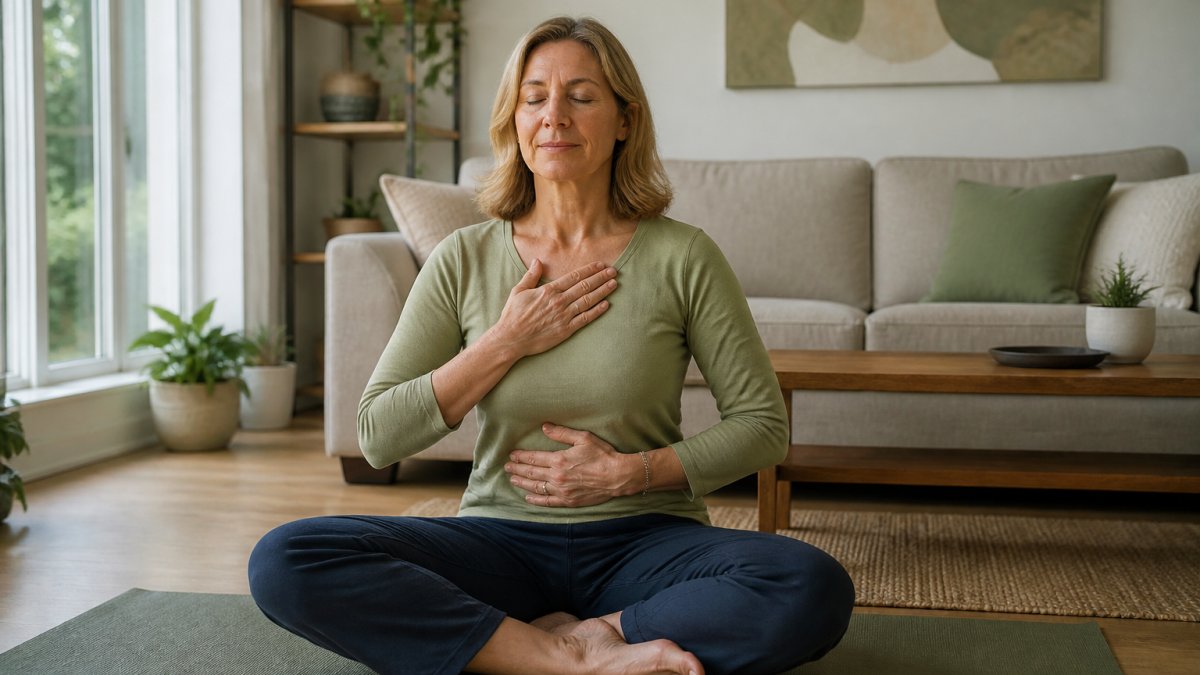
Ten minutes doesn't have to feel like a compromise. Short practices can be easier to fit into everyday life, giving you regular opportunities to notice tension, explore comfortable movement, and become more familiar with how your body responds.
Three Simple Nervous System Regulation Exercises to Try Tonight
You don't need to master a complicated routine to get started.
These three beginner-friendly practices can help you explore how breathing, movement, and attention influence the way your body feels.
1. Comfortable Breathing (2 Minutes)
Sit somewhere comfortable, with your feet supported.
Place one hand on your lower ribs and notice how they move as you breathe.
Allow your inhale and exhale to happen naturally. If it feels comfortable, experiment with a slightly slower exhale.
Avoid forcing deep breaths or holding your breath.
What to notice: Does your breathing feel easier? Are your shoulders moving with every inhale? Can you allow them to rest a little more comfortably?
If you become lightheaded, stop the exercise and return to normal breathing.
2. Jaw and Tongue Awareness (2 Minutes)
Let your lips rest together or slightly apart, with your teeth comfortably separated.
Notice where your tongue is resting and whether you're pressing it against your teeth or the roof of your mouth.
Without forcing anything, allow your jaw to rest in a comfortable position.
You can gently open and close your mouth a few times within an easy range.
What to notice: Were you clenching without realizing it? Does your jaw feel different when you stop actively holding it?
If your jaw clicks painfully, catches, or locks, stop and seek appropriate professional guidance.
3. Slow, Attentive Walking (3–5 Minutes)
Take a short walk around your home or another safe, comfortable space.
Rather than focusing on speed or distance, notice how your feet meet the floor.
Pay attention to how your arms swing, how your shoulders move, and whether you're holding unnecessary tension.
There's nothing special you need to accomplish.
What to notice: Does your body feel different when you slow down and pay attention to how you're moving?
If walking isn't comfortable or practical, try gentle seated marching instead.
Remember: You don't have to complete all three practices. Choose one that feels appropriate and begin there.
How to Stack Them Without Overthinking It
You don't need all three. Pick the one matching where your tension actually lives:
- Jaw and face tension: start with the jaw and tongue release.
- Shoulders and neck: start with comfortable, unforced breathing, then add a few gentle shoulder rolls.
- Hips and back stiffness: start with slow walking.
Do one practice for a week before adding a second. If you miss a day, pick it up the next without ceremony. The goal is a practice that survives a bad week, not a perfect streak.
Building a Nervous System-Friendly Self-Care Routine
A nervous system-friendly self-care routine is built around consistency, not duration. Short practices may be easier to fit into your week than one long session.
Anchor each practice to something you already do. After your morning coffee. Before you open your laptop. In the car before you walk into the house. Existing habits carry new ones.
Sleep and rest belong in this conversation too. The CDC guidance on sleep and chronic disease notes that insufficient sleep is linked to a range of long-term health problems, and no breathing exercise compensates for a chronic sleep deficit.
Hydration and steady meals matter as well. Skipping lunch and running on caffeine makes a calm nervous system much harder to find.
Safety, Trauma Sensitivity, and When to Seek Professional Care
Good courses tell you their limits. Nervous system regulation is not trauma therapy.
If you have a history of trauma, check whether a course offers guidance on pacing and consent. Inward-focus practices can be activating for some people, and a responsible program says so up front.
Seek professional care if you notice:
- Symptoms that are worsening rather than easing
- New numbness, weakness, or loss of coordination
- Pain that wakes you at night or follows a fall or injury
- Persistent low mood, panic, or intrusive thoughts
The National Center for Complementary and Integrative Health is a useful starting point for evaluating complementary practices and understanding what the evidence does and doesn't support.
Realistic Expectations: What These Courses Can and Cannot Do
A good beginner course should help you develop practical skills, not promise to transform your nervous system overnight.
You may learn to recognize tension earlier, become more comfortable exploring gentle movement, or find breathing and body awareness practices that fit into your daily life.
Those are meaningful skills.
But nervous system regulation exercises aren't a cure for chronic pain, a substitute for medical treatment, or a guaranteed solution to recurring muscle tension.
Persistent pain and stiffness can have many contributing factors, and some require medical evaluation.
Look for programs that respect those boundaries, encourage you to modify or stop when something doesn't feel right, and focus on helping you better understand your body.
Progress doesn't have to be dramatic to be worthwhile.
How Calm Library Fits Into the Picture
If you're looking for a beginner-friendly approach that doesn't require rearranging your entire life, Calm Library was designed with that in mind.
Created by a licensed massage therapist and bodywork educator, Calm Library combines gentle self-myofascial release, body awareness, and nervous system regulation in short, self-paced programs.
Rather than simply teaching you how to relax, the focus is on helping you understand the physical patterns that may contribute to recurring tension, stiffness, and restricted movement.
It's an approachable starting point for women who want practical tools, a better understanding of their bodies, and a little less of that familiar "Why is my neck tight again?" frustration.
Because feeling better shouldn't require turning self-care into another full-time job.
Finding Your Starting Point
You don't need to overhaul your life to start paying closer attention to your body.
A few minutes of gentle movement, breathing, or body awareness can be a practical place to begin.
And when the same tension keeps returning, understanding your body's patterns may be more useful than simply working harder on the tight spot.
Less forcing. More understanding.
Ready to explore a different approach?
Explore Calm Library and discover a gentler way to wotk with recurring tension.
Frequently Asked Questions
Can beginners learn nervous system regulation without meditating every day?
Yes. Meditation is one option, but nervous system regulation includes a much wider range of practices. Gentle movement, slow walking, body awareness exercises, and breathing techniques all count. Many beginner courses teach short, practical exercises you can do in five to ten minutes. The key is consistency, not intensity. Practicing a few minutes most days tends to be more useful than one long session per week, and it does not require a meditation habit to work.
How much time do nervous system regulation practices take?
Most beginner-friendly practices take between five and fifteen minutes. A short breathing exercise might take three minutes. A guided body scan could take ten. Gentle movement sequences often run ten to twenty minutes. The courses designed for busy schedules typically break content into short lessons you can complete during a lunch break or before bed. You do not need an hour of free time to make progress, and stacking a few short practices across your day works well.
What should I look for in a beginner nervous system regulation course?
Look for self-paced access so you are not locked into a schedule. Check whether the course explains the reasoning behind each practice, not just the instructions. Short lesson formats under fifteen minutes tend to fit real life better. Look for safety guidance and clear notes on when to see a healthcare professional. Finally, check whether the course teaches techniques you can use without special equipment, so you can practice anywhere.
How do I know if a nervous system regulation course is working?
Signs that a practice is helping include feeling slightly more at ease after a session, noticing tension earlier before it builds, sleeping a bit more soundly, or finding it easier to shift out of a stressed state. These changes are often gradual. Keep a simple log of how you feel before and after each practice for two weeks. If nothing changes after consistent effort, or if symptoms worsen, talk to a qualified healthcare professional about other options.