 Ultimate guide
How to Regulate Your Nervous System: A Practical Guide
Last Updated: November 20, 2026
Quick Summary
To regulate nervous system responses, use simple practices that shift your body toward a calmer state: longer-exhale breathing, gentle walking, slow shoulder rolls and spinal waves, and a sixty-second body awareness pause. Do them briefly and consistently rather than intensely, and match the technique to whether you feel activated, shut down, or overwhelmed.
- Longer-exhale breathing means inhaling for about four counts and exhaling for about six, for one to two minutes.
- Gentle walking at a comfortable pace for ten to fifteen minutes most days gives your system steady rhythmic input.
- Try three optional check-ins: morning, midday, and evening.
- Track neck and shoulder tension and sleep quality on a 1 to 5 scale, plus one sentence about your day.
- If breath focus makes you dizzy or panicky, shorten the counts and try grounding instead.
Table of Contents
- What Nervous System Regulation Actually Means
- Signs of a Dysregulated Nervous System
- Nervous System Regulation Exercises You Can Do Anywhere
- How to Regulate Your Nervous System Quickly
- How to Regulate Your Nervous System Daily
- Matching Techniques to Your Current State
- What Regulation Can and Cannot Do for Muscle Tension
- Trauma-Informed Cautions and When to Get Help
- Building Your Own Regulation Practice with Calm Library
- Frequently Asked Questions
What Nervous System Regulation Actually Means
If you've spent years chasing the same tight neck and shoulders, you've probably heard that the answer is to regulate nervous system responses. Learning how to regulate your nervous system starts with understanding what the phrase actually describes. Nervous system regulation is the process of influencing your body's automatic responses, the ones that govern heart rate, breathing, muscle tension, and digestion, so they shift toward a calmer, more flexible state.
At Calm Library, we think of it as a dial rather than a switch. Your body moves between alert and rest all day, and regulation is about helping it move back.
The Gap Between the Buzzword and the Biology
The language of nervous system regulation is everywhere online, but the practices grouped under it may be better understood as ways of influencing particular bodily processes rather than a single, clearly defined intervention, as UC San Diego's examination of the trend points out.
Signs of a Dysregulated Nervous System
Stress can show up in your body before you consciously recognize that you're feeling stressed. Maybe your jaw stays clenched through the workday, your shoulders creep toward your ears, or you catch yourself holding your breath while answering emails.
You might also notice changes in your sleep, digestion, mood, or ability to concentrate. These aren't diagnostic signs of nervous system dysregulation, but they're worth paying attention to. Recognizing your own patterns can help you notice when it's time to slow down, change positions, or take a break. Persistent, new, or unexplained symptoms, including a racing heart at rest, deserve medical evaluation.
Nervous System Regulation Exercises You Can Do Anywhere
The best nervous system regulation exercises are the ones you'll actually do, which means simple, portable, and short. You don't need a mat, a class, or an hour. You need a few minutes and enough attention to notice what changes.
What most lists leave out is the how: how long, how often, what it should feel like, and what to do when it doesn't work. Here are four practices with enough detail to actually try them today, plus the trade-offs worth knowing before you build a habit around them.

Longer-Exhale Breathing
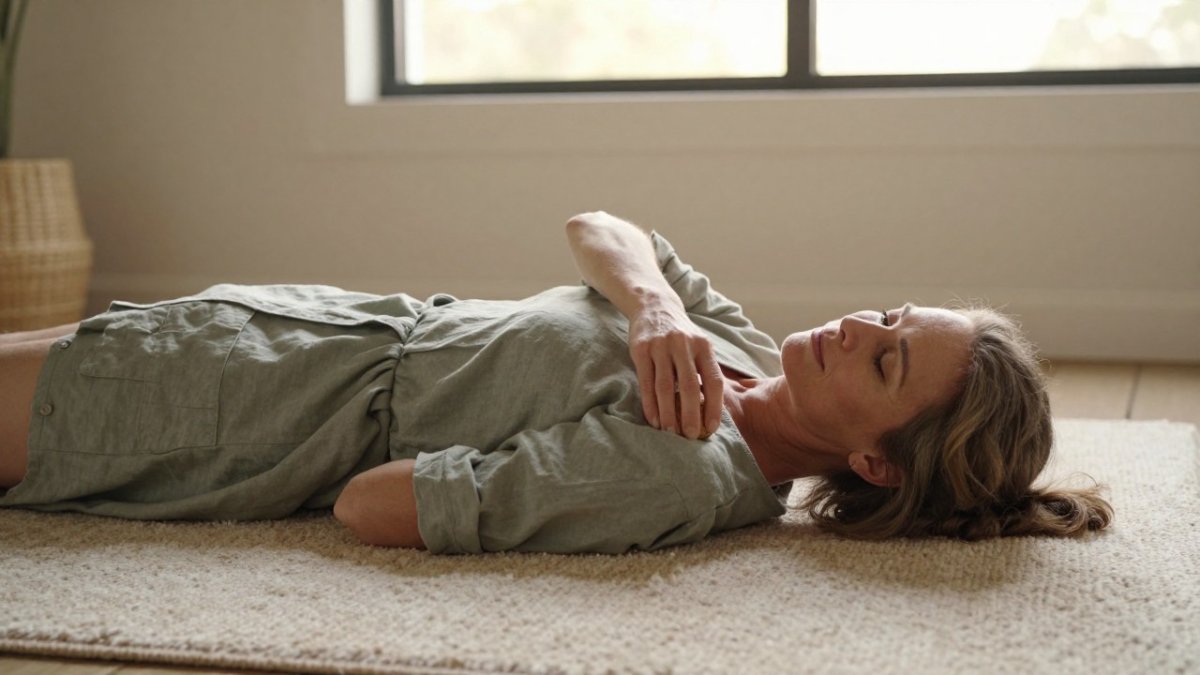
Sit or lie down so your ribs can move. Breathe in through your nose for about four counts, then out through your nose or pursed lips for about six. Keep the inhale quiet and unforced. Repeat for one to two minutes, once or twice a day, or whenever you notice your jaw or shoulders tightening.
If focusing on your breath makes you feel dizzy, anxious, or uncomfortable, stop the exercise and return to your natural breathing rhythm. You can try grounding through your feet or looking around the room instead. Breathwork isn't comfortable for everyone, and forcing it defeats the purpose.
Gentle Walking
Ten to fifteen minutes at a comfortable pace, ideally outdoors, most days. The point isn't cardio. It's rhythmic, low-effort movement that gives your system steady input through your feet, hips, and eyes while your shoulders get a break from holding a position.
If weather or joints make outdoor walking hard, pacing a hallway or marching gently in place counts.
Shoulder Rolls and Slow Spinal Waves
Shoulder rolls: lift both shoulders toward your ears on an inhale, then let them drop on a long exhale. Five to eight rounds, slow enough that you feel the drop rather than just performing it.
Spinal waves: standing or seated, tuck your chin and round forward gently, then reverse and lengthen up tall, moving one vertebra at a time. Five to six slow repetitions.
A Body Awareness Pause
Before or after any of the above, spend sixty seconds noticing: Where is the tension right now? Is your jaw clenched? Are your shoulders higher than they were an hour ago? Don't try to fix anything yet. Just gather information.
This is the least glamorous practice and the one most likely to change your relationship with recurring tension, because it teaches you to catch patterns earlier. If you want to pace this kind of exploration safely, learn how to practice somatic movement safely before you add more.
What to Expect, Realistically
Some people notice a small shift within a few minutes, such as a slower breath or looser shoulders. These practices influence how tense you feel and how quickly you recover; they may be one part of addressing recurring tension. Yoga, stretching, and dancing all fit here too, as long as you're not forcing range or pushing through pain to get there.
Here are the four practices the article details, with how long to do them and how often.
Practice | What to do | Time and frequency |
|---|---|---|
Longer-exhale breathing | Inhale about four counts, exhale about six | One to two minutes, once or twice a day |
Gentle walking | Comfortable pace, ideally outdoors | Ten to fifteen minutes, most days |
Shoulder rolls and spinal waves | Lift and drop shoulders; round and lengthen spine slowly | Five to eight rounds; five to six repetitions |
Body awareness pause | Notice tension without trying to fix it | Sixty seconds, before or after other practices |
How to Regulate Your Nervous System Quickly
When you need to know how to regulate your nervous system quickly, the goal is a small shift, not a total reset. A longer exhale, a cold splash of water on your face, humming, or a few minutes of slow walking can all help take the edge off a spike.
Just don't expect a single technique to fix a pattern that built up over years. If you want something structured and timed, this five-minute somatic routine for stress gives you a sequence you can follow right now.
How to Regulate Your Nervous System Daily
If you enjoy a little structure, here's an example of how you might incorporate nervous system regulation into your day. Think of these as three opportunities to check in with yourself: morning, midday, and evening. Pick one, try all three, or use them whenever you notice tension building. There's no quota to fill.
Most advice stops at "do it daily." What's missing is a plan specific enough to follow on a bad week and a way to tell whether it's working. That's the gap this section fills.
A Simple Daily Plan and Progress Tracking
Think of the day in three anchors: morning, midday, evening. Each anchor takes two to ten minutes, and none of them require equipment.
- Morning (2 minutes): Two minutes of longer-exhale breathing before you check your phone. Same chair, same time, so it becomes automatic rather than a decision.
- Midday (5-15 minutes): A short walk, a few slow shoulder rolls, or a one-minute body awareness pause between tasks. Pick one and keep it boring.
- Evening (5 minutes): Gentle movement or slow stretching before bed, then a thirty-second check-in with your neck, shoulders, and jaw.
That's the whole plan. It's deliberately small, because a plan you'll do on a chaotic Tuesday beats a perfect one you abandon by Thursday.
How to Track Progress Without Turning It Into a Chore
Keep it to three data points, noted in a notebook or phone each evening:
- Neck and shoulder tension on a simple 1-5 scale.
- Sleep quality on the same 1-5 scale.
- One sentence about what your day looked like (long meeting, heavy lifting, poor sleep, a walk outside).
That third line is the one people skip and the one that matters most. After two to three weeks, you're not looking for a dramatic transformation. You're looking for patterns: Does tension run higher after certain kinds of days? Does the morning breathing actually change anything, or is the walk doing the work? Which anchor do you skip first when life gets busy?
Some weeks will look flat. That's normal and not a sign the practice failed.
Watch out: if tracking starts feeling like another performance to grade yourself on, drop the numbers and keep only the one-sentence note. The goal is curiosity, not a scorecard.
When Daily Feels Like Too Much
Some days, you might have ten minutes. Other days, you might remember to relax your jaw while waiting for your coffee to brew. Both count.
These practices are meant to support you, not become another obligation. The beauty of learning nervous system regulation techniques is that you can pull them out of your proverbial toolbox whenever you need them. Llearn how to build a somatic practice without daily pressure and scale back to what fits.
Matching Techniques to Your Current State
Different states call for different tools, and this is where most advice falls short. Feeling activated, with a racing heart and tight muscles, responds well to long exhales and slow movement. Feeling shut down or foggy calls for gentle activity and brighter input, like standing up, walking, or humming.
Feeling overwhelmed sits somewhere in between, and simpler is better: one breath practice, one slow walk, nothing complicated. The skill is noticing which state you're in before you pick a technique to regulate nervous system activity.
What Regulation Can and Cannot Do for Muscle Tension
Regulation may help you notice tension earlier, before it becomes a knot.
What it cannot do is erase a pattern built from years of posture, loading, and habit. If your hips stay tight no matter how calm you get, the tension may need targeted work too. These somatic exercises for hip tension address a specific area directly.
Trauma-Informed Cautions and When to Get Help
Some practices can feel uncomfortable, and that's worth respecting. If closing your eyes or focusing on your breath makes you feel anxious or flooded, stop and try something grounding instead, like feeling your feet on the floor or looking around the room.
Go gently. Never push through pain, and don't force a stretch or breath to go further than feels comfortable. If tension is persistent, worsening, or comes with numbness, weakness, or unexplained symptoms, have it evaluated by a qualified healthcare professional. Self-care supports medical care; it doesn't replace it.
Building Your Own Regulation Practice with Calm Library
Calm is a skill your body can learn.
That doesn't mean you'll never feel stressed, tense, or overwhelmed again. Life happens. But learning to recognize your body's responses and having a few practical techniques at your disposal can change how you navigate those moments.
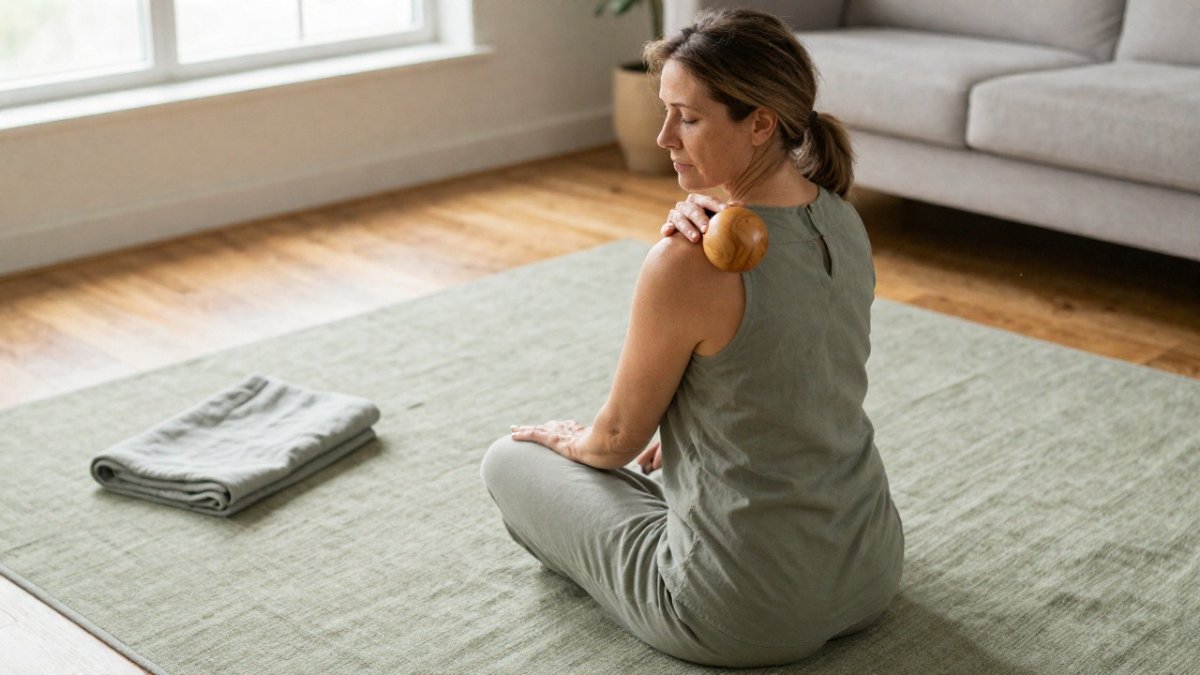
At Calm Library, we combine gentle self-myofascial release, body awareness, movement, and nervous system regulation to help you address recurring patterns of pain and tension.
No force. No hour-long routines. Just practical skills you can use at home, on your own schedule.
Explore Calm Library and discover a gentler approach to recurring pain and tension.
Frequently Asked Questions
How do you fix a dysregulated nervous system?
You don't fix it like a broken machine. Regulation is about giving your body repeated signals of safety through breathing, movement, and body awareness. Start with short, comfortable practices: a few minutes of slow exhaling, gentle walking, or noticing physical sensations without judgment. Consistency matters more than intensity. If symptoms persist or worsen, a healthcare professional can help rule out other causes.
What are the signs of a dysregulated nervous system?
Common signs include persistent muscle tension in the neck, shoulders, or jaw, feeling on edge without a clear reason, shallow breathing, poor sleep, digestive changes, and a startle response that feels disproportionate. Some people feel shut down or numb instead of activated. These signs overlap with many other conditions, so they aren't a diagnosis. Think of them as clues worth noticing rather than a label. Tracking when they show up can help you choose the right regulation exercises.
How long does it take to regulate your nervous system?
Some nervous system regulation exercises offer quick shifts, like a slower exhale or a short walk, that you may notice within minutes. There's no universal timeline because sleep, workload, health, and environment all play a role. A short daily routine of five to ten minutes, done most days, tends to be more sustainable than occasional long sessions.
Can nervous system regulation help with muscle tension?
It can help in some cases, especially when tension is tied to a heightened stress response. Gentle movement, breathing exercises, and body awareness may temporarily reduce perceived tension and improve comfort. That said, muscle tension has many contributors, including loading patterns, joint issues, and movement habits. Regulation is one useful piece, not a cure-all. If a specific area stays tight despite consistent practice, an evaluation by a qualified professional can clarify what else is involved.