 How-to
7 Somatic Exercises for Hip Tension That Actually Help
Last Updated: November 14, 2026
Quick Summary
Somatic exercises are slow, mindful movements that retrain how your brain senses and controls a muscle, using awareness rather than end range. For hip tension, gentle moves like leg slides, reclined pigeon, and pelvic tilts help release guarding instead of forcing a stretch. A few minutes most days is a realistic starting point.
- Hip tension usually traces back to muscular guarding, joint restriction, or nervous system protection.
- A muscle that feels tight is not always short, and pulling a guarding muscle often deepens the tightness.
- Repeat leg slides five to eight times per side, keeping the pelvis quiet as the heel slides.
- Start with one or two exercises and adjust the duration and frequency based on how your body responds.
- Stop if an exercise causes sharp or increasing pain, spreading discomfort, numbness, or tingling. Persistent or worsening symptoms should be evaluated by a qualified healthcare professional.
Table of Contents
- Why Your Hips Feel Tight (And Why Stretching Harder Doesn't Help)
- Somatic Exercises for Hip Flexors: Releasing the Front of the Hip
- Somatic Hip Release Exercises: A Gentle Sequence for Stiff Hips
- How to Loosen Extremely Tight Hips Without Force
- Somatic Exercises for Hip Tension Yoga: Blending Mindful Movement with Breath
- Building a Progressive Routine: Duration, Frequency, and What to Expect
- Safety First: When to Seek Medical Care for Hip Tension
- Explore Calm Library: A Gentler Approach to Recurring Hip Tension
- Frequently Asked Questions
Why Your Hips Feel Tight (And Why Stretching Harder Doesn't Help)
You stretch your hip flexors every morning. You foam roll. You've tried the deep lunge your yoga teacher swears by. And by Thursday, that familiar grip is back in the front of your hip. If that loop sounds familiar, somatic exercises for hip tension offer a different way in, one that works with your nervous system instead of against it.
Here's the part most stretch routines skip. Your hips may not be short. They may be guarded, and a muscle that feels tight is not always a muscle that is short.
Common Contributors to Hip Tension
Hip tension can come from several places, including muscle guarding, joint stiffness, prolonged sitting or standing, previous injuries, and repetitive movement patterns.
And where you feel the tension isn't necessarily where the pattern started. Rather than assuming your hip flexors need another stretch, try changing your position, moving gently, and noticing how your body responds.
What Somatic Exercises Do Differently
Somatic exercises are slow, mindful movements that help you become more aware of how your body moves and holds tension. Instead of pulling a tight hip into a deeper stretch, you move gently and pay attention to the sensation. The goal is awareness, not end range.
If you recognize this pattern in your neck too, our guide to 7 somatic exercises for neck tension uses the same approach for another common trouble spot.
Somatic Exercises for Hip Flexors: Releasing the Front of the Hip
The hip flexors get blamed for almost every front-of-hip complaint. They're part of the story, but the release comes from control, not force. Before you move, it helps to know what you're actually working with, because "tight hip flexors" can mean a few different things.
What the Hip Flexors Actually Do
The main hip flexor is the iliopsoas, a combination of the psoas major and iliacus that runs from your lower spine and pelvis down to the top of your thigh bone. It lifts your knee and helps stabilize your spine.
Here's the nuance most stretch routines skip: a muscle that feels tight isn't always short. It may be guarding. That distinction matters because pulling a guarding muscle into a deeper stretch often teaches your nervous system to tighten further.
Leg Slides and Heel Presses
Lie on your back with knees bent and feet flat. Slowly slide one heel away from you along the floor, then draw it back. Keep the movement small and slow. On the return, press your heel gently into the floor and notice the front of your hip soften. Repeat five to eight times per side.
Watch out: if your lower back arches as your leg extends, shorten the slide. The point is a quiet pelvis, not a long reach.
Reclined Pigeon for Outer Hip Tension
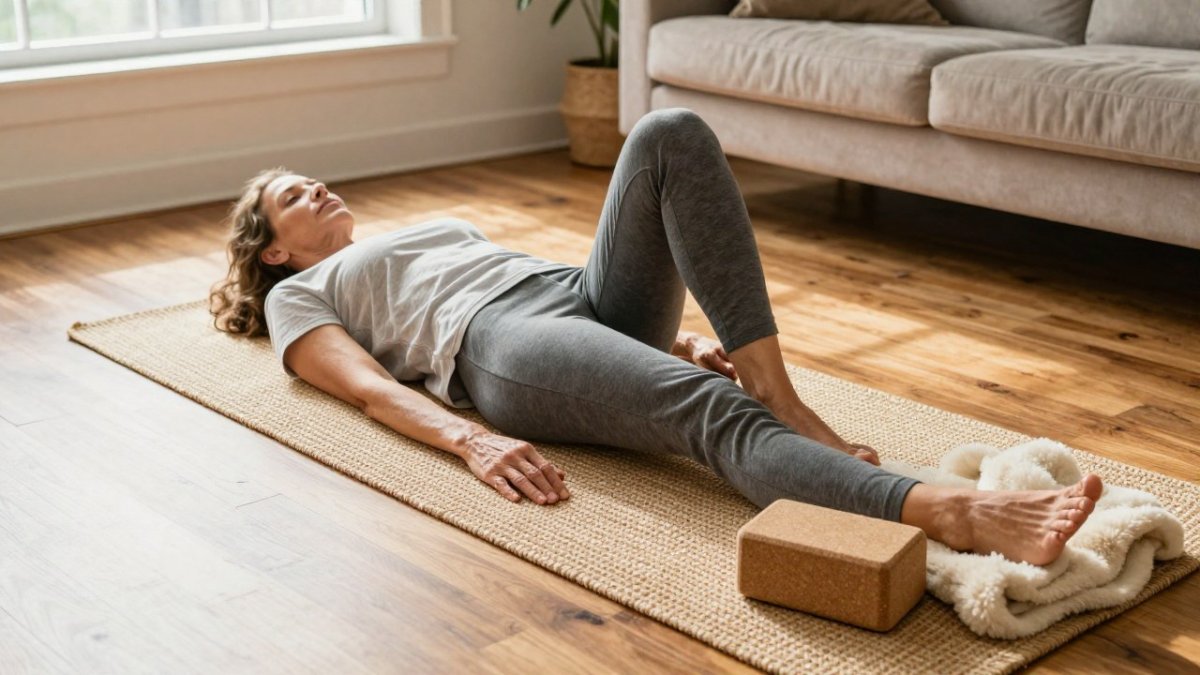
Lie on your back with your knees bent and cross one ankle over the opposite thigh. You can leave the supporting foot on the floor or rest it against a wall. Adjust your position until you feel a gentle stretch through the outer hip or buttocks. Breathe, relax, and give yourself 90 seconds if the position remains comfortable. There's no need to pull your leg closer to deepen the stretch.
Active Knee Lifts for Control
Lie on your back with both knees bent. Slowly lift one knee toward your chest a few inches, pause, and lower it with control. Keep the movement small enough that your pelvis stays still. Five slow repetitions per side teaches the hip flexor to turn on and off rather than stay gripped.
Modifications When the Front of the Hip Feels Guarded
If these positions feel uncomfortable, adapt rather than push:
- Place a pillow under your knees to reduce the pull on the front of the hip.
- Do the leg slides seated in a chair if lying down is uncomfortable.
- Cut the range in half and add a pause at the end of each repetition.
- Breathe out as you move and let the inhale be passive.
Small movements done with attention beat big stretches done with grit. If front-of-hip pain is sharp, catches, or comes with a clicking that feels unstable, that's a signal to have it looked at rather than to stretch harder.
Somatic Hip Release Exercises: A Gentle Sequence for Stiff Hips
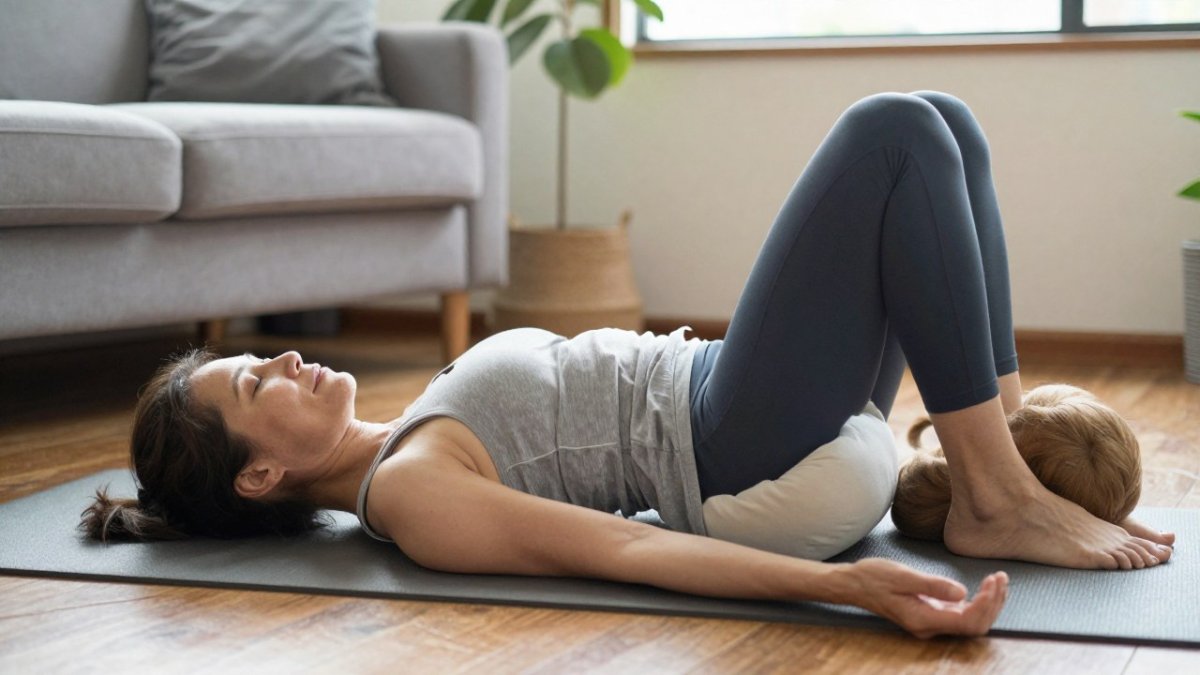
This short sequence works the hips from the inside out. Move slowly enough that you can feel each shift.
Pelvic Tilts and Spinal Undulations
Lie on your back and gently rock your pelvis toward your ribs, then away. Let the motion ripple up your spine like a slow wave. Five or six rounds is plenty.
Seated Knee Drops and Windshield Wiper Knees
Sit tall on a chair with feet flat. Let one knee fall open, then bring it back. Alternate sides like windshield wipers. Keep the range small and the pace slow.
If you want a fuller daily routine, our 10-minute fascia release routine pairs well with this sequence.
How to Loosen Extremely Tight Hips Without Force
Here's where most people go wrong: they treat a tight hip like a knot to overpower. But when you're learning how to loosen extremely tight hips, the winning strategy is patience, not pressure. Your nervous system decides how much range feels safe. Push past that line and it tightens the brakes.
Modifications for Limited Mobility and Pain Sensitivity
Try these adjustments when movement feels guarded:
- Do the moves lying down instead of seated
- Cut the range in half
- Support your legs with a pillow
- Pause and breathe between each repetition
- Stop at the first sign of sharp pain
Small movements done with attention beat big stretches done with grit.
Somatic Exercises for Hip Tension Yoga: Blending Mindful Movement with Breath
Yoga and somatic work share a slow, breath-led pace, but they aim at different targets. Yoga often moves toward a shape. Somatic movement moves toward sensation. Blending them gives you the best of both.
Butterfly Pose with a Somatic Twist
Sit with the soles of your feet together. Instead of pressing your knees down, let them rise and fall naturally with your breath. Notice the small rocking motion. That gentle exploration is the point.
Moving Bridge for Pelvic Balance
Lie on your back and gently lift your pelvis a few inches, then slowly lower it. Keep it slow and small. This builds pelvic balance and body awareness without strain.
Curious how the two approaches compare? Read somatic movement vs regular yoga to see where each one fits.
Building a Progressive Routine: Duration, Frequency, and What to Expect
You don't need to do all seven exercises in one session. Start with one or two, move slowly, and notice how your hips feel before and afterward.
As you become more familiar with the movements, you'll likely discover which ones feel particularly helpful. Those are the ones worth returning to. Five minutes of paying attention to your body can be a great starting point.
There's no need to work your way up to a longer daily routine unless that's something you enjoy.
If daily practice feels like pressure, our guide on building a somatic practice without daily pressure reframes what progress looks like.
Signs an Exercise Is Helping (and When to Stop)
Stop if an exercise causes sharp or increasing pain, spreading discomfort, numbness, or tingling. Persistent or worsening symptoms should be evaluated by a qualified healthcare professional.
Safety First: When to Seek Medical Care for Hip Tension
Research on moving with pain and somatic principles suggests that gentle, mindful movement can support people managing persistent pain, but persistent or unexplained symptoms deserve a proper assessment. If you're unsure how to start safely, our guide on how to practice somatic movement safely walks through the basics. A review of Hanna Somatic Education notes that case studies and testimonials suggest possible relief for chronic muscle pain, though the evidence base is still developing.
Explore Calm Library: A Gentler Approach to Recurring Hip Tension
If you've been stretching the same tight hips for years and the tension keeps coming back, it might be time to change your approach.
Try backing out of the stretch a bit, breathing, and relaxing instead of pushing. Notice what changes. You might be surprised by how much your body responds to doing less.
Calm Library's self-paced programs combine gentle self-myofascial release, body awareness, and nervous system regulation to help you explore and address recurring patterns of pain and tension at home.
Frequently Asked Questions
What are some somatic exercises that can help release hip tension?
Somatic exercises for hip tension focus on slow, mindful movements that increase body awareness and gently release muscle tension. Examples include pelvic tilts, leg slides, seated knee drops, windshield wiper knees, and reclined pigeon. These movements are performed slowly and with attention to sensation, rather than forcing a stretch. Start with one or two exercises and gradually build a routine.
How long should I practice somatic exercises for hip tension?
Start with five minutes and see how your body responds. You can gradually add movements or spend more time with the ones you find helpful. There's no established ideal practice frequency, so find a routine that works for your body and your schedule.
Can somatic movement help with recurring hip stiffness?
Somatic movement can help address recurring hip stiffness by teaching you to move with greater awareness and ease. Unlike static stretching, somatic exercises emphasize slow, controlled movements that help recalibrate muscle tension and improve proprioception. However, results vary, and somatic movement is not a cure-all. It works best as part of a broader approach that includes medical guidance when needed.
What should I do if a hip exercise increases my pain?
If a hip exercise increases your pain, stop immediately and rest. Pain is a signal to modify, not push through. Try a smaller range of motion, move more slowly, or support the area with a pillow. If the pain persists or worsens, consult a healthcare professional. You should never force a stretch or ignore sharp pain. Persistent or unexplained hip pain warrants evaluation by a qualified practitioner to rule out underlying conditions.